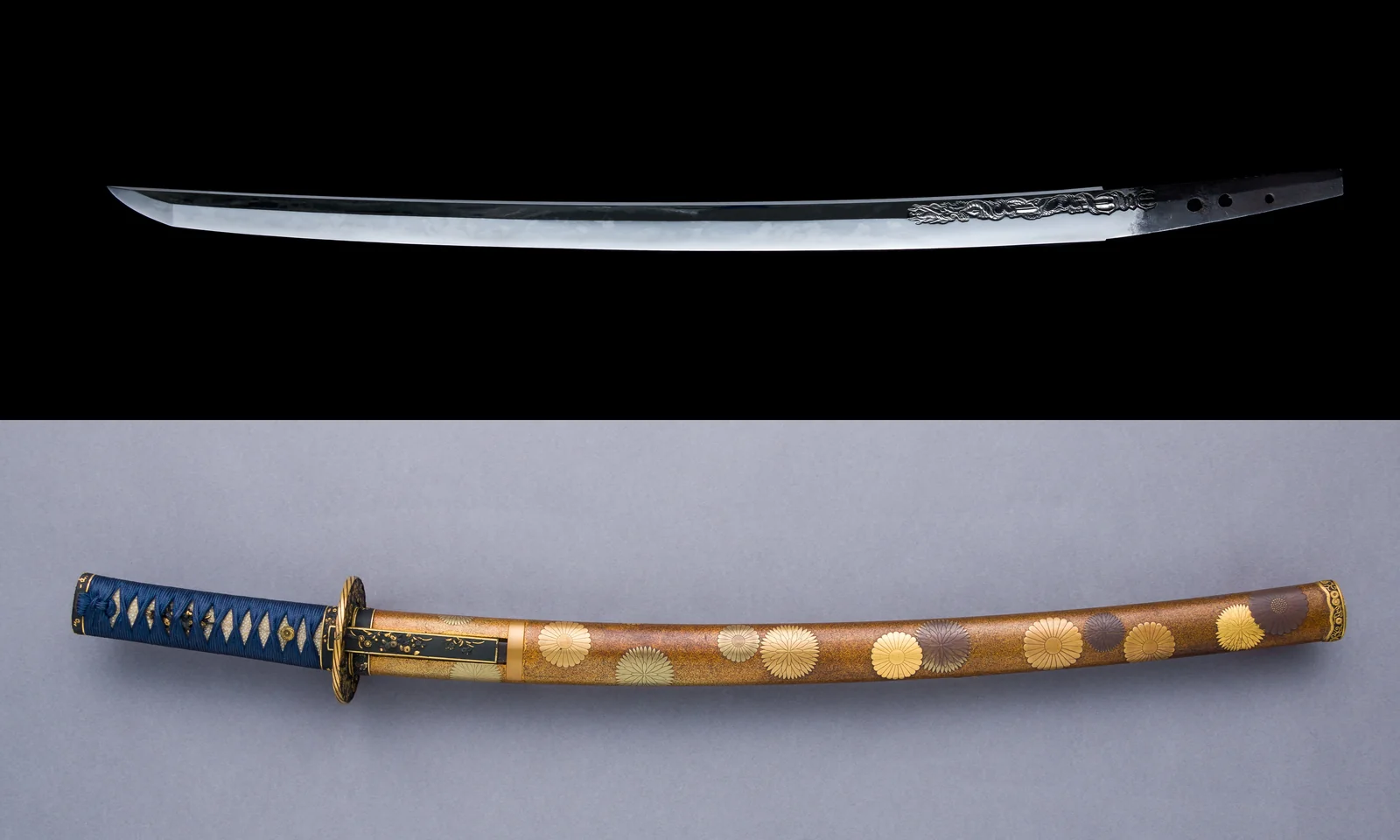
The wakizashi was the second sword of the daishō, the matched pair that defined samurai status. Roughly twelve to twenty-four inches in blade length, it was made by the same smiths and to the same standards as the katana it accompanied. Its functions were many — indoor sidearm, backup weapon, parrying blade, ritual implement — and the constant feature was that, unlike the katana, the wakizashi was almost never put down.
Origins
Short Japanese swords of various forms had existed for centuries before the wakizashi was formally codified. The form took its specific role only after the katana became the standard primary sword in the late Muromachi period. The pairing of katana and wakizashi as the daishō — "big-little" — emerged during the Sengoku and was institutionalized under the Tokugawa shogunate, when the right to wear two swords became a defining legal privilege of the samurai class.
Design
A wakizashi blade is essentially a short katana — the same construction, same forging tradition, same metallurgy, scaled down. Blade lengths conventionally run between 12 and 24 inches (30 and 60 cm); blades shorter than 12 inches are tantō and longer than 24 inches are short katana. The curvature is similar to a katana's, the grip is long enough for two hands when needed but functional one-handed, and the mountings match the katana mountings of the daishō pair, often using identical fittings to mark the swords as a set.
Total weight runs around one and a half pounds. A wakizashi is light enough to be drawn and used quickly with one hand, which mattered in its primary role as an indoor and close-quarters weapon.
- TypeShort curved sword, sidearm
- OriginJapanese, late Muromachi period
- In Servicec. 1400 – 1876
- Total Length~22–30 in
- Blade Length~12–24 in
- Weight~1–1.5 lbs
- Primary UseIndoor sidearm, parrying weapon, implement of seppuku
Indoor weapon
Japanese architectural conventions were directly relevant to the wakizashi's role. Traditional buildings had relatively low ceilings, sliding paper-screen doors, narrow corridors, and tatami-mat rooms that did not accommodate a four-foot katana well. By etiquette and often by law, samurai removed their katana when entering another's home, leaving them on a rack near the entrance. The wakizashi, however, was kept on the person.
This made the wakizashi the working weapon for any combat that began indoors — assassinations, household disputes, surprise attacks. The short blade was practical in cramped quarters where a katana could not be drawn or swung effectively. In two-sword styles like the nitō-ryū associated with Miyamoto Musashi, the wakizashi was used in the off-hand as a parrying and counter-attacking weapon, complementing the longer katana in the primary hand.
Seppuku
The most heavily ritualized use of the wakizashi was in seppuku, the formal warrior suicide that became codified under the Tokugawa shogunate as the proper death for a samurai who had failed his lord, his duty, or his honor. The wakizashi was the implement; the actual cutting was performed with the shorter tantō in many ceremonial cases, but the wakizashi was the standard weapon for the practice and a samurai's wakizashi was often kept particularly polished and ready against the possibility of need.
Seppuku had elaborate procedures — specific clothing, specific positions, specific verbal formulas, often a designated second (kaishakunin) who would behead the principal at the moment after the cut to limit suffering. The wakizashi was the visible focal point of the entire ritual.
Legal status
Under Tokugawa law, the right to wear two swords (taito) was reserved to samurai. Townsmen and merchants — some of whom became extraordinarily wealthy during the Edo period — could legally wear a single short sword, generally a wakizashi, for self-defense while traveling, but could not wear a katana. This made the wakizashi the most widely owned and worn quality blade in Tokugawa society, since it crossed the legal class boundary in a way the katana did not.
The 1876 Sword Abolishment Edict ended legal sword-carry for civilians along with the samurai class itself. The wakizashi, like the katana, became a household and historical object rather than a working weapon.
Legacy
Surviving wakizashi blades from the great Edo-period smiths are studied alongside katana blades as examples of mature Japanese sword-making. The form persists today as a category in traditional sword smithing and in martial arts that include short-sword work, particularly the two-sword styles that descend from the nitō-ryū tradition.